
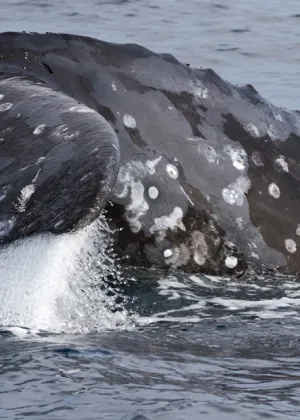
Whale Watching

- Summary
- Gallery
- Events
- Videos
- Podcasts
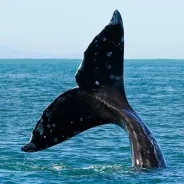
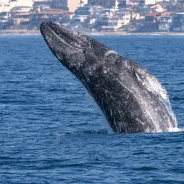
Each year, thousands of gray whales make an epic 12,000-mile round trip: migrating from Arctic feeding grounds to the warm breeding lagoons along Mexico’s Baja California, then traveling back north again. During various times of year, other whales—including humpback and blue whales—feast in these same food-rich waters. In California you can see whales by taking a boat tour, paddling a kayak, or sometimes just by standing on the right coastal bluff.
Keep in mind that sightings are never guaranteed—whales travel on their own schedule and feeding conditions can change from week to week.
When is whale-watching season in California?
Along some parts of the California coastline—especially near Monterey Bay and Dana Point—whales can be seen nearly year-round. But different species follow distinct migration patterns along the coast, so here's the best time to catch each one.
- Gray Whales: November–May. Whales are most commonly seen during their southern migration all along the California coast between December and February, but you may also spot mothers and calves on their northbound migration closer to shore from March–May.
- Humpback Whales: April–November. Sightings often peak between July through September, especially in Monterey Bay.
- Blue Whales: May–October, but it depends on the particular feeding conditions that year.
- Orcas: April–May and sometimes September–October. Orcas (aka killer whales) are less common overall, but can sometimes be seen in Monterey Bay.
Can you see whales from the shore in California?
It is possible to spot a whale from the coastline. Your best bet to see whales up close is a whale-watching excursion out on the water, but if you know where to go, you can often see them from land too (binoculars help). You won’t likely see whales breaching, but you might catch them spouting as they travel.
Gray whales are known to swim closer to shore, so the winter and spring months tend to provide more chances to see them from land, especially if you stand on headlands or bluffs over the beach. (The Whale Trail website identifies dozens of spots for seeing whales along North America’s Pacific coastline.)
Explore these top whale-friendly destinations along the California coast, listed from north to south:
Mendocino County
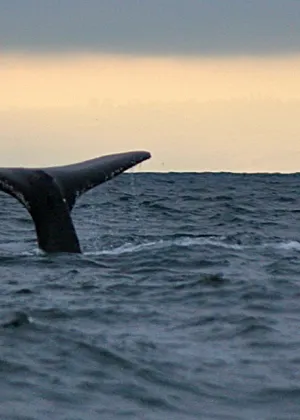
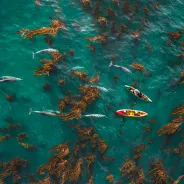
Gray whales are so famous for parading past the Mendocino Coast that the area holds an annual series of whale-watching festivals in March. For a closer look, book a spot on a whale-watching charter out of Fort Bragg; if you’re feeling adventurous and waters are calm, rent kayaks.
Viewing spots on land: High vantage points along the coast are good locations for observing whales, particularly on calm mornings. Favorite locations include the coastal trails in Mendocino Headlands State Park and at Point Arena Lighthouse.
San Francisco Bay Area
Many whale fans embark on day cruises from the San Francisco waterfront, including Pier 39 and the San Francisco Marina Yacht Harbor. Some excursions head out to the Farallon Islands, about 30 miles from the city, where you can see humpbacks and blue whales, as well as dolphins, porpoises, and seals.
Viewing spots on land: In San Francisco itself, you might see gray whales from Whale Trail spots including Crissy Field and Lands End.
Consider these other areas around the Bay Area for whale watching, mostly from headlands on the shore:
Sonoma County
Take whale-watching excursions from Bodega Bay or walk the high cliffs of Bodega Head and Gualala Point Regional Park.
Marin County
Head to Point Reyes National Seashore, where the lighthouse and Chimney Rock make great vantage points for seeing migrating gray whales.
San Mateo County
The area known as the San Francisco Peninsula includes headlands in Montara and Half Moon Bay, both less than 45 minutes’ drive south of San Francisco. In Half Moon Bay, for instance, take your binoculars to Pillar Point Bluff.
Santa Cruz County
On the southern edge of the Bay Area, Santa Cruz sits at the intersection of the Pacific Ocean and the food-rich Monterey Bay that’s a magnet for whales—as well as dolphins, sea otters, and seals. To get out on the water, rent a kayak, take a guided kayak tour, or book a spot on a yacht excursion.
Viewing spots on land: In town, take your binoculars to West Cliff Drive, which has good lookouts. Or take the 9-mile drive north to Davenport, a former whaling community that offers good views from Hole in the Wall and Panther beaches.
Monterey County
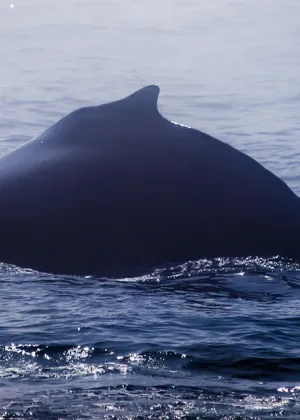
Monterey sits alongside the Monterey Bay National Marine Sanctuary, where the deep Monterey Submarine Canyon and nutrient-rich waters offer a year-round habitat for whales and other marine life. Take a guided kayak or whale-watching tour from Fisherman’s Wharf or off tiny Moss Landing.
Viewing spots on land: Head south from town to high points along the Monterey County coastline, like Point Lobos State Natural Reserve and Garrapata State Park.
Channel Islands National Park
You’l find wild rugged beauty on the five largely undeveloped islands of Channel Islands National Park, which lies off California’s Central Coast. You’ll also encounter a wealth of whales, dolphins, and porpoises swimming in the Santa Barbara Channel, the waters that separate the Channel Islands from the shores along Santa Barbara and Ventura counties. The Santa Barbara Channel is one of the two Whale Heritage Areas in the U.S. (the other one is also on this list):
Santa Barbara
Board a whale-watching tour from Santa Barbara Harbor or take a walk through coastal parks with high perches, such as Douglas Family Preserve or Shoreline Park.
Ventura County
The towns of Oxnard and Ventura are even closer to the national park—as close as 10 miles—and both offer several options for whale-watching excursions. From land, take your binoculars to Ventura Pier, a designated location along the Whale Trail.
Los Angeles County
The towns of Long Beach and San Pedro offer prime launching points for whale-watching tours near L.A., and you can take such trips throughout the year.
Viewing spots on land: Head 9 miles west from San Pedro to the Point Vicente Interpretive Center; the rocky promontory here on the Palos Verdes Peninsula is a great spot to gray whales.
Orange County
So many whales pass by Dana Point that it has earned the designation as both a Whale Heritage Site and the Dolphin & Whale Watching Capital of the World®. The town’s 200-foot-high cliffs make good perches for watching the whales—and some experts even think that the whales themselves use the cliffs as a landmark.
Year-round, you can take excursions with longtime tour operators whose boats include catamarans and vessels with underwater viewing capabilities. You can also head to nearby Newport Beach for more year-round tour options.
Viewing spots on land: Check the waters from the headlands in Dana Point—like Dana Point Scenic Lookout, the Bluff Top Trail, or Strand Vista Park.
San Diego County
Lots of whale-watching excursions depart from downtown San Diego or Mission Bay. Some even offer guarantees—a free ride on another day if you don’t see either a whale or a dolphin.
Viewing spots on land: During the winter months in particular, you can spot whales from a few spots around San Diego, like the high bluffs at Torrey Pines State Natural Reserve and the Birch Aquarium in La Jolla or from Cabrillo National Monument in Point Loma.
Featured Whale Watching
Use keyboard arrow keys to move through items.
- Whale Watching Near Los Angeles
- Orange County Whale Watching

Orange County Whale Watching
- Channel Islands Whale Watching
Channel Islands Whale Watching
- Whale Watching Near San Francisco
Whale Watching Near San Francisco
- Santa Cruz Whale Watching
Santa Cruz Whale Watching
- Whale Watching Near Monterey
Whale Watching Near Monterey
- Whale Watching in San Diego

Whale Watching in San Diego
- Mendocino Whale Watching
Mendocino Whale Watching
Events In:
Use keyboard arrow keys to move through items.
- Mendocino Coast Whale Festivals
Mendocino Coast Whale Festivals
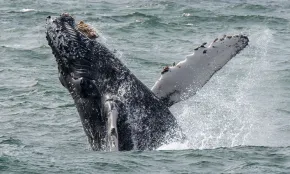
March 2–16, 2026 Spot migrating gray whales amid chowder tastings and coastal revelry
Videos
Use keyboard arrow keys to move through items.

Luxury Minute
The Ritz-Carlton Laguna Niguel: California Luxury Minute Resorts

California 101
California’s Highway One Road Trip
California 101
Santa Cruz: 5 Amazing Things
California 101
Orange County’s Best Beaches
California 101
The Channel Islands National Park
Hidden Gems
Point Arena-Stornetta Public Lands
California 101
North Coast Best Beaches
Podcasts
Use keyboard arrow keys to move through items.





Subscribe to our Newsletter
Get weekly travel inspiration, sent directly to your inbox!
Interested in upcoming events? Looking for hidden gems? Or tips on planning the ultimate family getaway? We've got that covered, and more.