Yosemite National Park is one of the world's great rock-climbing destinations, with thousands of routes winding up the park's enormous granite cliffs. Climbers come here for the exceptional variety of terrain and the chance to climb beneath some of the most spectacular scenery in the Sierra Nevada.
The heart of Yosemite climbing is split between the Yosemite Valley and Tuolumne Meadows. The valley offers enormous formations like El Capitan and Half Dome, which rise thousands of feet above the Merced River. Tuolumne Meadows is home to smooth granite domes and sharp peaks with high-elevation routes surrounded by meadows and alpine lakes.
Yosemite has climbs for a remarkably wide range of abilities, from introductory single-pitch routes where beginners can learn to belay and move on granite to multi-pitch climbs and legendary big walls that require several days of technical climbing. The routes below are arranged from easiest to most challenging.
MORE: FAQ: What to Know About Visiting Yosemite National Park
Do You Need a Permit to Rock Climb in Yosemite?
For most day climbs, you don't need a climbing permit. The important exception is an overnight big-wall climb. Yosemite requires climbers who spend the night on a big wall to obtain a free wilderness climbing permit. Permits are available year-round at the Yosemite Conservancy Climbing page. They can also be picked up in person at the Climbing Management Office or at the kiosk (open 24/7) near El Capitan Bridge, the day before or the day of your climb.
There are also important regulations concerning food storage, fixed ropes, equipment caches, and camping. Rules and closures can change, so check current park regulations before setting out.
Rock Climbing Guides and Classes in Yosemite
For hands-on instruction, sign up with Yosemite Mountaineering School and Guide Service, which conducts seminars and classes for beginning, intermediate, and advanced climbers from mid-April to October each year. Classes meet daily in Yosemite Valley and Tuolumne Meadows; equipment rentals are available. Yosemite Mountain Shop, located in the park, also has climbing gear for purchase.
MORE: Guided Adventures in Yosemite
Rock Climbing in Yosemite for Beginners
Swan Slab: Yosemite Valley
If you're new to outdoor climbing, Swan Slab is one of the most approachable places to get acquainted with Yosemite granite. The crag sits across from Yosemite Valley Lodge and offers a collection of relatively short routes, including several easier climbs. Its easy access makes it a favorite amongst beginners.
Difficulty: Easy to moderate
Area: Yosemite Valley, north side
Permits: No climbing permit is required for day climbing
Best for: First outdoor climbing experience, top-roping, and practicing basic techniques
Manure Pile Buttress: Yosemite Valley
Despite its unglamorous name, Manure Pile Buttress is one of Yosemite Valley's best-known moderate climbing areas. The roughly 600-foot formation sits east of El Capitan on the north side of the valley and offers several classic multi-pitch routes, including After Six and the famous Nutcracker.
Instead of climbing a single short pitch, you'll move upward through several pitches of granite, gaining increasingly expansive views of the valley as you climb. The routes are primarily traditional climbs, meaning climbers place removable protection such as cams and nuts as they ascend.
Difficulty: Moderate
Area: Yosemite Valley, north side
Permits: No climbing permit is required for day climbing
Best for: Climbers ready to progress from single-pitch climbing to multi-pitch traditional climbing
Scenery: Excellent views of El Capitan and the valley walls
Lembert Dome: Tuolumne Meadows
For a different Yosemite climbing experience, head high into the park to Tuolumne Meadows. Lembert Dome rises above the eastern end of the meadow and offers a collection of granite routes ranging from beginner-friendly climbs to substantially harder traditional lines. The rock here is generally smooth and clean with routes that wind up the rounded granite face.
At Lembert, you climb for the views. Instead of looking up at the towering walls of Yosemite Valley, you'll climb above an expansive alpine meadow with views of the Sierra peaks.
Difficulty: Easy to advanced, depending on route
Area: Tuolumne Meadows
Permits: No climbing permit is required for day climbing
Best for: Climbers transitioning to multi-pitch routes and alpine granite
Scenery: Panoramic views across Tuolumne Meadows and the High Sierra
Stately Pleasure Dome: Tuolumne Meadows
On the opposite side of Tenaya Lake, Stately Pleasure Dome offers some of Tuolumne's quintessential slab and crack climbing. The formation contains several classic moderate routes that follow cracks, liebacks, and sections of granite face climbing. Climbers should be prepared for the distinctive friction climbing (the slab leans outward at an angle of less than 90 degrees relative to the floor) found throughout Tuolumne.
Difficulty: Moderate
Area: Tuolumne Meadows, near Tenaya Lake
Permits: No climbing permit is required for day climbing
Best for: Intermediate climbers looking for classic Tuolumne granite
Scenery: Views over Tenaya Lake and the surrounding High Sierra
Cathedral Peak: Tuolumne Meadows
Cathedral Peak is one of Yosemite's most spectacular moderate climbs. The distinctive granite spire rises above Tuolumne Meadows and culminates in a small summit with enormous views across the High Sierra.
The classic Southeast Buttress is technically moderate, but the climb is substantially more involved than a beginner crag. The route requires an approach, multiple pitches, traditional protection, route-finding, and an exposed descent.
Difficulty: Moderate to advanced
Area: Tuolumne Meadows
Permits: No climbing permit is required for a day climb; overnight wilderness use requires a wilderness permit
Best for: Experienced outdoor climbers ready for an alpine multi-pitch climb
Scenery: Exceptional High Sierra views from the summit
Advanced Rock Climbs in Yosemite
Half Dome: Regular Northwest Face
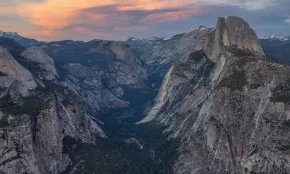
Half Dome is one of Yosemite's defining landmarks, and its enormous northwest face is one of the most celebrated climbing objectives in the world. The Regular Northwest Face rises roughly 2,200 feet and contains more than 20 pitches, combining free climbing with aid-climbing sections.
Although the technical grade may look modest compared with Yosemite's hardest free climbs, the route's length, exposure, route-finding, aid-climbing requirements, and commitment make it a serious big-wall undertaking.
The scenery is extraordinary. From the face, climbers look down into Yosemite Valley while Half Dome's massive granite architecture surrounds them. Reaching the summit puts you above one of the most recognizable landscapes in the American West.
Difficulty: Advanced
Area: Yosemite Valley, Half Dome
Permits: An overnight wilderness climbing permit is required if camping during the climb; day climbs do not require this permit
Best for: Experienced multi-pitch and big-wall climbers
Scenery: Vast views over Yosemite Valley, the Sierra Nevada, and Half Dome's exposed summit
MORE: Guide to Yosemite Hikes,and Half Dome Hike
 miksov / Getty Images
Extreme Rock Climbing in Yosemite
El Capitan: Yosemite Valley
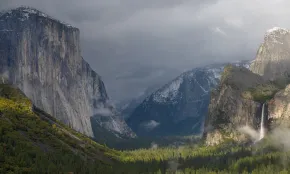
Few climbing destinations are as legendary as El Capitan. The nearly vertical granite monolith rises more than 3,000 feet above Yosemite Valley and contains some of the world's most famous big-wall routes.
For climbers, El Cap isn't just one climb, but an enormous collection of routes covering a wide range of difficulties. The Nose, located between El Capitan's two major faces, is perhaps the most famous. At roughly 3,000 feet high, it’s commonly climbed over several days by big-wall teams.
Climbers spend nights on tiny ledges thousands of feet above the ground, hauling food, water, ropes, and equipment up the wall. From El Capitan Meadow, visitors can often see climbers through binoculars as they slowly work their way toward the summit.
For the world's strongest free climbers, El Capitan offers even more extreme objectives. The Dawn Wall, a 3,000-foot route on El Capitan's southeast face, is considered one of the hardest big-wall free climbs in the world. Climbers Tommy Caldwell and Kevin Jorgeson made history in January 2015 when they became the first to free-climb El Cap's Dawn Wall. The remarkable feat took 19 grueling days.
Difficulty: Extreme; varies dramatically by route
Area: Yosemite Valley
Permits: A free wilderness climbing permit is required for overnight big-wall climbs; day climbing does not require a climbing permit
Best for: Highly experienced big-wall climbers
Scenery: Unmatched views over Yosemite Valley from thousands of feet above the Merced River
Watching Rock Climbers in Yosemite
For visitors who would rather keep both feet on the ground, watching climbers inch their way up massive peaks can be an adventure in itself. For one of the best spectator experiences, head to El Capitan Meadow and look toward its enormous southwest face. Bring binoculars and scan the wall for tiny figures moving across the granite. On multiday climbs, you may even spot the lights of climbers settling in for the night on ledges high above the valley floor.