California’s ranching traditions run deep, dating back more than 250 years to the Spanish and Mexican eras—and you can still experience the legacy today.
In addition to overnight stays at dude ranches, these historic cattle ranches, coastal dairies, and working vineyards offer everything from wine tasting to guided hikes and horseback rides.
Working Cattle Ranches You Can Visit
Rancho Guejito, Escondido
Just 40 minutes northeast of San Diego in Escondido, this 23,000-acre expanse offers a glimpse of California as it looked centuries ago. One of the last intact Mexican land-grant ranches, Rancho Guejito dates to 1845 and remains a working landscape of rolling grasslands and oak woodlands.
What You Can Do There: Visitors can sample estate-grown wines in an 1885 farmhouse, then take a hayride tour at Rancho Guejito Vineyard. The ranch’s pasture-raised, grass-fed beef is also available for pick-up.
Tejon Ranch, near Bakersfield
Set where the Central Valley meets the Tehachapi Mountains, Tejon Ranch traces its origins to an 1843 Mexican land grant and spans 270,000 acres. While there have been longstanding plans for residential development and the ranch operates the Outlets at Tejon, much of the property remains a working cattle operation and untouched wilderness.
What makes it especially remarkable is that it covers four ecological zones: the Mojave Desert, Central Valley, Sierra Nevada, and Southern California.
What You Can Do There: Join guided hikes, seasonal wildflower walks, and birdwatching trips led by the Tejon Ranch Conservancy.
Hearst Ranch, San Simeon, and Paso Robles
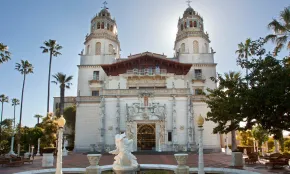
While closely tied to Hearst Castle, the Hearst family’s Central Coast legacy began in 1865 with George Hearst’s purchase of the 50,000-acre Piedra Blanca Rancho. Today’s Hearst Ranch includes 83,000 acres along the coast, as well as the 73,000-acre Jack Ranch east of Paso Robles.
What You Can Do There: At historic San Simeon Village, savor wines produced from the ranch’s Paso Robles vineyard as you gaze out at San Simeon Bay from the deck of Hearst Ranch Winery. The restored 1852 Sebastian’s General Store sells the ranch’s grass-fed beef and its gourmet deli, Seaside Foods, makes a meatloaf sandwich from Hearst beef.
 Courtesy of Santa Margarita Ranch
Santa Margarita Ranch
Founded in 1774 by Spanish missionaries, the 14,000-acre Santa Margarita Ranch sits along the original El Camino Real that linked the state’s 21 missions. Home to such historic structures as a Spanish-era asistencia, once used as a farmhouse and granary, and a Wells Fargo stagecoach stop building, Santa Margarita still operates as a working cattle ranch.
What You Can Do There: Margarita Adventures operates a zip-line tour that glides for 1.5 miles above the ranch. Day trips include foraging outings, wildflower tours, and e-bike rides across the property. Winemaking here began during the Mission Era and continues today at the acclaimed Ancient Peaks Winery, which has a tasting room and restaurant in Santa Margarita.
Horse Ranches and Equestrian Experiences
Jack Tone Ranch Arabians, near Stockton
Established in 1849 and California’s oldest family-owned horse ranch, Jack Tone Ranch near Stockton is an institution in the Arabian horse world. The ranch raises champion Arabians descended from the legendary stallion Fadjur.
What You Can Do There: With its historic buildings and a working farm, the 40-acre ranch is open (by appointment) for visits and tours, and also offers riding lessons.
 Courtesy of Seabiscuit Heritage Foundation
Ridgewood Ranch, near Willits
In the hills of Mendocino County near Willits, 5,000-acre Ridgewood Ranch was the home of the famed racehorse Seabiscuit after his retirement. The stallion’s owner, Charles S. Howard, purchased the property in 1919, and Seabiscuit arrived in 1940.
What You Can Do There: Self-guided tours include stops at Seabiscuit’s barn, and you can see a life-sized statue of this champion horse, as well as memorabilia from his illustrious career. The ranch also hosts nature walks into redwood groves, and its carriage house is available for overnight stays.
More Historic Ranch Sites Open to the Public
Rancho Camulos, Ventura County
Rancho Camulos served as the inspiration for the setting in Helen Hunt Jackson’s classic 1884 novel Ramona. The 40-acre site in eastern Ventura County is part of the 1,800-acre Camulos Ranch Company, a working cattle ranch.
What You Can Do There: Tour the grounds and museum at Rancho Camulos on Sunday afternoons. With 19th-century adobe buildings, citrus orchards, rose gardens, and the Tataviam village site, it’s like a journey into California’s past.
Wilder Ranch State Park, near Santa Cruz
Wilder Ranch State Park preserves the buildings and landscapes of a dairy ranch that began operations in 1871. More than 30 miles of trails explore the 7,000-acre property that climbs from the coast and into the Santa Cruz Mountains.
What You Can Do There: Guided weekend tours take visitors to such surviving ranch structures as its 1897 Victorian farmhouse, barns, and rodeo arena.
Pierce Ranch, Marin County
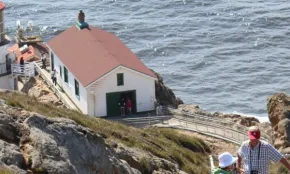
The coastal grasslands that are now part of Point Reyes National Seashore helped make this area of Marin County an early center for the California dairy industry. Listed on the National Register of Historic Places, the beautifully restored Pierce Ranch dairy was established in 1858 and was once considered to be the best dairy ranch in the Golden State. (It ceased operations in 1973.)
What You Can Do There: Interpretive panels tell the story of the ranch complex, which includes a former schoolhouse, blacksmith shop, dairy houses, and more. As a bonus, an easy walk leads from the ranch to wild McClures Beach.