Nestled along the Trinity River in Northern California, the Hoopa Valley Indian Reservation is the largest in the state. Located in Humboldt County, it spans nearly 90,000 acres and has been home to the Hoopa Valley Tribe and their ancestors for more than 10,000 years.
Never conquered or displaced, the Hoopa people (frequently spelled Hupa) have maintained their ancestral lands for millennia. A treaty in 1864 officially recognized the tribe’s control of the reservation, and today the Hoopa are a federally recognized sovereign nation of about 3,000 members.
“A lot of it had to do with the leadership and the fierce warriors who went out in the hills and stopped the intruding forces before they got to the valley,” says tribal chairman Joe Davis. “Later on, there were a lot of diplomatic efforts that took place, with good leadership. The people came together to protect what was theirs.”
 Courtesy American Indigenous Tourism Association
Preserving the Land, Preserving the Culture
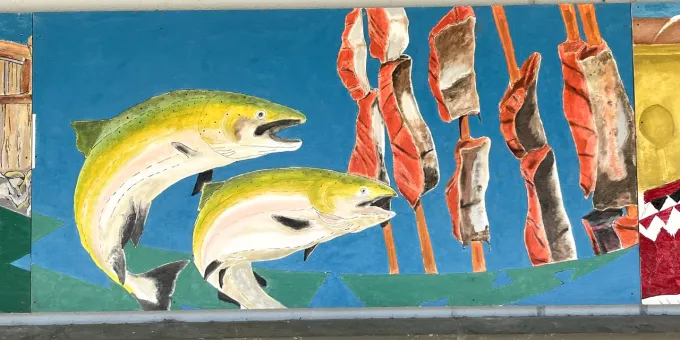
The Hoopa are frequently described as a river people—and the Trinity River is central to that identity. Chinook and coho salmon and steelhead swim in the Trinity, and the tribe also fishes for lamprey eels and green and white sturgeon.
“We’re always working to restore the fishery so we’re able to harvest enough fish to keep our way of life going,” Davis says. “But the river is not where we would like it to be, ever since the dams came in and after the fish kill of 2002. By working with the federal government and other partners and implementing strategies for temperature control, increased flows, hatchery works, and habitat restoration, the fishery will be restored—or at least improved.”
The tribe runs businesses including Acorn Wireless, the K’ima:w Medical Center, Hoopa Roads Aggregate and Ready-Mix, and sustainable forestry operations. These ventures support the community while preserving land and cultural practices.
The Hoopa are equally committed to the protection of their culture through the Hupa language, which is part of the Dene (Athabascan) language family. The number of fluent speakers has declined over the generations, says Davis, but the tribal education department has launched initiatives to encourage its use.
The nonprofit Hupa Language Immersion Nest is teaching Hupa as a first language to young children on the reservation—something that hasn’t happened for several generations. The grassroots Warrior Institute seeks to help Hoopa youth develop a sense of physical and spiritual balance by emphasizing health and fitness, cultural awareness, and the development of outdoor skills, such as whitewater rafting.
Visiting Hoopa Valley
Museum and Tours
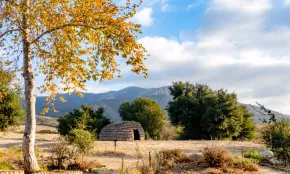
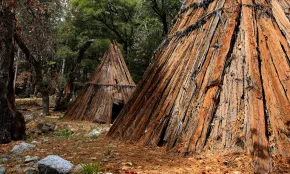
Start your exploration of the rich culture of the Hoopa people at the Hoopa Tribal Museum, where you can see beautiful examples of tribal basketry, dance regalia, and other traditional crafts. The museum also leads tours to village sites along the Trinity River, where you’ll see the Hoopa’s cedar plank houses (known as xontah) and ceremonial sweathouses.
Get out on the water with Beaver Creek Guide Service—operated by Hoopa tribal member and third-generation fishing guide Anthony Colegrove—which leads boat tours and fishing trips on the Trinity River. The river has year-round runs of steelhead and spring, summer, and fall salmon runs.
During the second weekend in August, the Hoopa celebrate the tribe’s annual Sovereign Days, commemorating the Hoopa-Yurok Settlement Act of 1988 that resolved longstanding disputes between the neighboring tribes.
The festival includes a parade, fireworks, food vendors, and a cooking contest. Don’t miss the Stick Game, an Indigenous sport with teams of three players that Davis likens to “kind of a combination of hockey, wrestling, and lacrosse.”
Gaming and Staying on Tribal Lands
The tribe is currently renovating the Tsewenaldin Inn, a 22-room riverside motel with a pool in the town of Hoopa. The inn sits next to the Hoopa Tribal Museum and the Lucky Bear Casino, a 5,000-square-foot gaming destination. While you’re in town, pick up supplies at the well-stocked, tribe-operated supermarket at the Hoopa Shopping Center.
There are camping options at tribally owned facilities, too, including the Tish Tang Campground on the Trinity (contact the Hoopa Recreation Department for details).
“We have the river. We have a fishery. We have hiking trails,” says Davis. “So we’re open for business and encourage people to come and explore our community and get to know our people.”