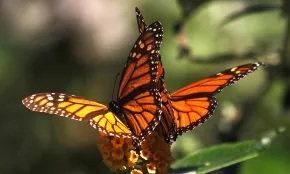
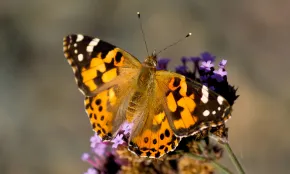
Every fourth-grader studies the western monarch butterflies' amazing migration from Canada to the temperate California coast. But in recent years, school students also learned that the exquisite orange-and-black butterfly's population declined by 99.9 percent between 1980 and 2020. (Though there was a short-lived rebound from 2021 to 2023, populations levels have returned to near-record lows.)
Scientists believe that this extreme population decline of the last four decades has been caused by habitat loss, pesticide use, and the widespread disappearance of milkweed—the only plant on which monarchs lay their eggs. Climate change is also playing a growing role, altering weather patterns and disrupting migration timing.
Where Can Monarchs Be Seen in California?
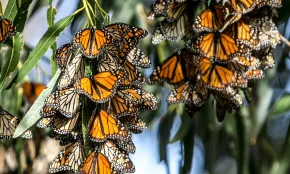
Monarch butterflies don't fare well at temperatures below 50 degrees, so they prefer Central and Southern California's warm, mild winters. They also tend to cluster in groves of eucalyptus, Monterey cypress, or Monterey pines because the trees act as a blanket and umbrella during winter storms. At peak moments in healthier years, thousands of butterflies can cluster on a single tree, creating a striking visual display as branches appear to shimmer and rustle.
Along with Pismo Beach and Pacific Grove, California locations that historically have hosted spectacular monarch gatherings include Natural Bridges State Beach in Santa Cruz, the Fiscalini Ranch Preserve in Cambria, the Santa Barbara Land Trust’s Coronado Butterfly Preserve, and Goleta's Ellwood Mesa Open Space. Monarchs have also been spotted at Bodega Dunes Campground in Bodega Bay and Ventura County's Point Mugu State Park. While numbers today are far smaller than in past decades, these sites remain important refuges and are monitored annually by volunteers and scientists.
How and When Are Monarchs Counted?
The most recent picture of the insects’ progress or decline becomes available every year after the annual Western Monarch Thanksgiving Count, which typically takes place from mid-November to early December, and again for the secondary New Year’s count that typically runs from the last week of December 24 through the first week of January. These community science efforts, coordinated by groups like the Xerces Society, rely on trained volunteers to survey overwintering sites and provide one of the most comprehensive datasets on western monarchs.
Can I Help With the Monarch Count?
Yes—you can help with the monarch count. Volunteers are a crucial part of it. Many of the overwintering sites—where the counts are done—welcome trained volunteers, and organizations like the Xerces Society provide guidance, training materials, and site information. Even if you’re new, you can contribute by joining a local count team, attending a brief training, or assisting experienced monitors. If you don’t live near an official site, reporting sightings through projects like the Western Monarch Milkweed Mapper still helps researchers track monarch distribution and habitat use.
More Ways to Help Monarchs
Want to help these elegant insects? There's much you can do, from planting native milkweed and nectar plants in your yard (and ensuring those plants are pesticide-free before and after planting) to (as mentioned above) reporting monarch sightings on the Western Monarch Milkweed Mapper website. In short: Reducing pesticide use, supporting habitat restoration efforts, and participating in local counts can all make a meaningful difference. Learn about the Western Monarch Call to Action, and download the Xerces Society's how-you-can-help brochure.