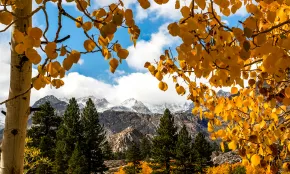
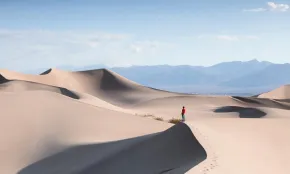
With an ancestral homeland spanning much of California’s Eastern Sierra and the Owens Valley, the 2,000-member Bishop Paiute Tribe is the fifth-largest in California by population. Today, the 875-acre Bishop Paiute reservation sits on the western edge of the city of Bishop—a fraction of the tribe’s original homeland, but a place deeply rooted in the preservation of both its environment and culture.
The Bishop Paiute is one of several tribes in the region that comprise the Nüümü, the traditional name for the people also collectively referred to as the Owens Valley Paiute.
The Nüümü’s 2-million-acre territory is known as Payahüünadü, which means “land of flowing water” in the Paiute language.
Preserving Traditions in the “Land of Flowing Water”
In 1912, the U.S. government reserved just 67,000 acres for the Bishop Paiute Tribe. Then, 20 years later, President Herbert Hoover revoked that agreement, transferring water rights and ownership of much of the land to the city of Los Angeles.
The diversion of water from the Owens Valley led to lasting environmental and cultural consequences, says tribal chairwoman Meryl Picard.
“Our sources of food have been affected,” she says. “Pine nuts—that’s changed because of the water. Pinyon trees take 40 years to grow before they even start producing pine nuts. All of these foods, and our hunting and fishing too, is tied into the water.”
Water played an essential role in the culture and Picard says the tribe built extensive irrigation systems to make wise use of this precious resource. The person chosen to direct irrigation efforts was considered an honored tribal leader and Picard says there’s even a Pauite word for this vital role: tuvaijü.
When generations of tribal members were separated from their traditions and language due to Native American boarding schools, Picard notes, the Bishop Paiute suffered a significant loss of cultural knowledge: Today only one member of the tribe speaks Paiute fluently.
To help preserve the language, the tribe developed a Paiute dictionary and established a language program where instructors study with the remaining fluent speaker to strengthen teaching efforts for future generations.
Picard says she personally benefited from the cultural knowledge passed down by the grandparents who helped raise her. “I was fortunate,” she says. “My grandparents were part of a generation that knew more and I learned from them. It was all just part of our lives growing up. Down to hunting, fishing, and gathering. Those things were taught to me. But many people never had the cultural upbringing that I did.”
Things to Do on Bishop Paiute Tribal Lands
Located along Highway 395 in Bishop—about 90 minutes south of Yosemite National Park— the tribe’s 24-hour Wanaaha Casino offers 300 slot machines and table games, including blackjack and poker. It’s also a dining destination, thanks to the TuKaNovie Restaurant, known for its steaks and pasta specialties. The tribe is also developing the Wanaaha Hotel, a four-story, 78-room property with a fitness center, pool, and a coffee bar.
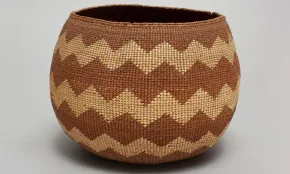
For a deeper look at Paiute culture, head to the Owens Valley Paiute Shoshone Cultural Center, where exhibits tell the story of the region’s Indigenous peoples. Check out the exquisite examples of tribal beadwork and basketry—considered among the finest made by any North American tribe—and note the zigzagging patterns both on baskets and around the center, inspired by the wing patterns of red-winged blackbirds.
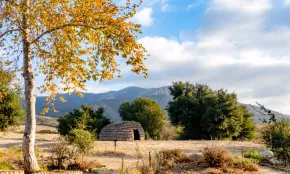
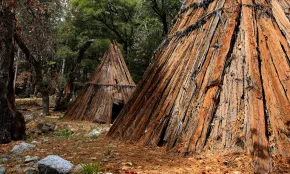
Tribal members helped design the exhibits and crafted the center’s numu nawvi, a dwelling built from grasses and river rocks gathered locally. Craftspeople occasionally conduct demonstrations, and the center’s gift shop is a great spot to find authentic arts and crafts, as is the annual Holiday Market.
Nearby, the Bishop Paiute’s Conservation Open Space Area preserves an area of native habitat and fish ponds that you can explore along a 1-mile trail. A trail guide identifies many of the plants the Paiutes have traditionally used for food and medicines.
On Tuesday evenings during summer and fall, stop by the community market at the cultural center to shop locally grown foods as part of the Bishop Paiute Food Sovereignty Program.
Or take a hike in the Inyo National Forest and in nearby areas administered by the Bureau of Land Management, where you might spot culturally significant artifacts, including petroglyphs.
“There are so many places to hike and fish, and bouldering is a big thing too,” says Picard. “But there’s also a cultural significance to these areas. Sometimes you may just go off a trail a little bit and find something like an arrowhead. Just leave that—don’t take it. Like the petroglyphs, it’s all proof that we've been here. That our people traveled throughout this valley and always preserved the land.”